
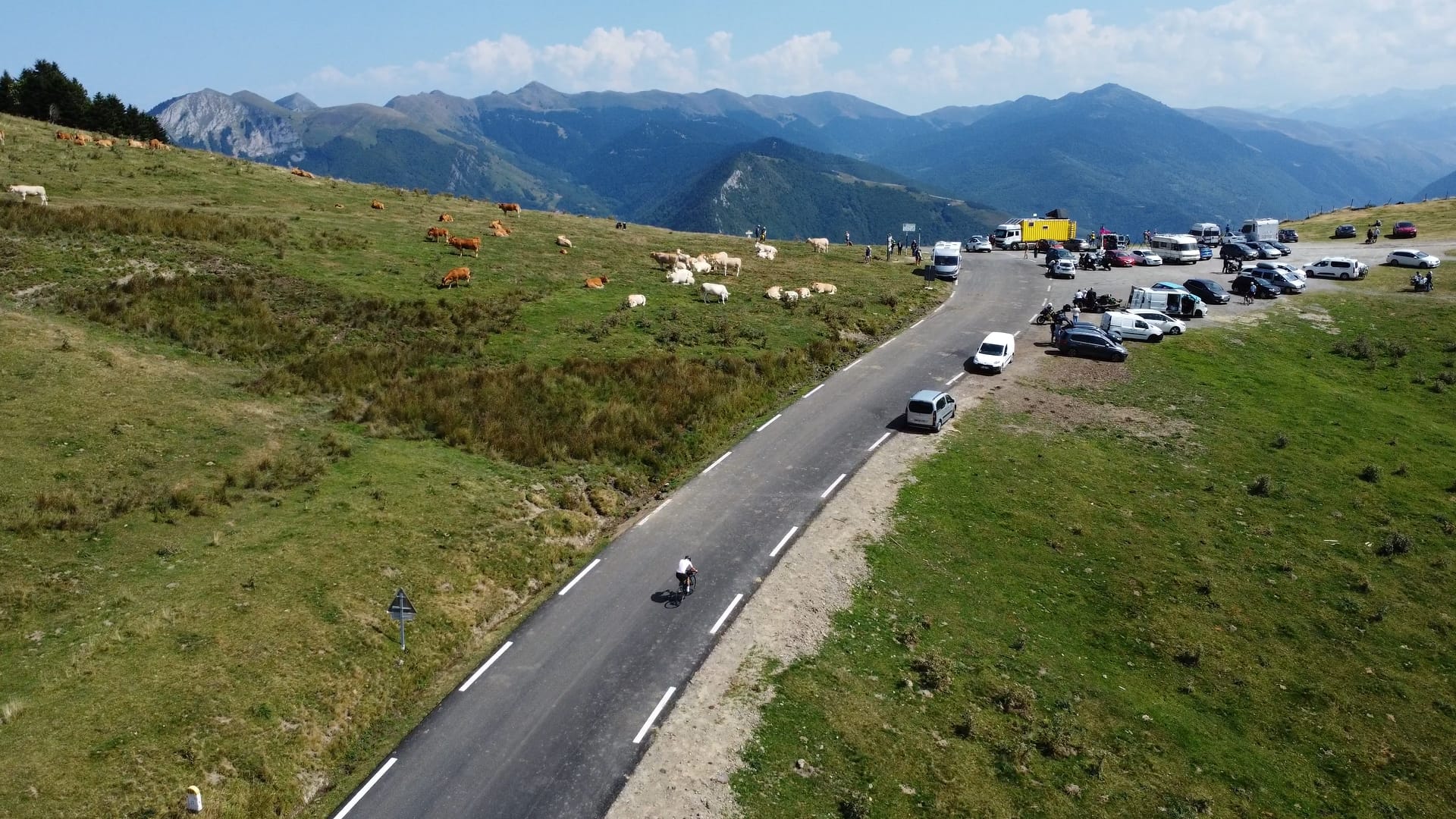
5 epic Tour de France climbs
in the Pyrenees
If you’re a passionate road cyclist, riding the legendary climbs of the Pyrenees is a dream come true. The Tour de France visits them often, and for good reason. Over the past years, we’ve cycled here countless times — and it’s never the same twice.
In this blog, we share our Top 5 Epic Tour de France Climbs in the Pyrenees. It wasn’t easy to choose, because honestly — every road here is scenic and challenging. But if we had to pick, these five stand out as truly unforgettable.
And if you’d like to tick these famous cols off your own bucket list, you can — with our unique cycling e-guides and route support in the Pyrenees!
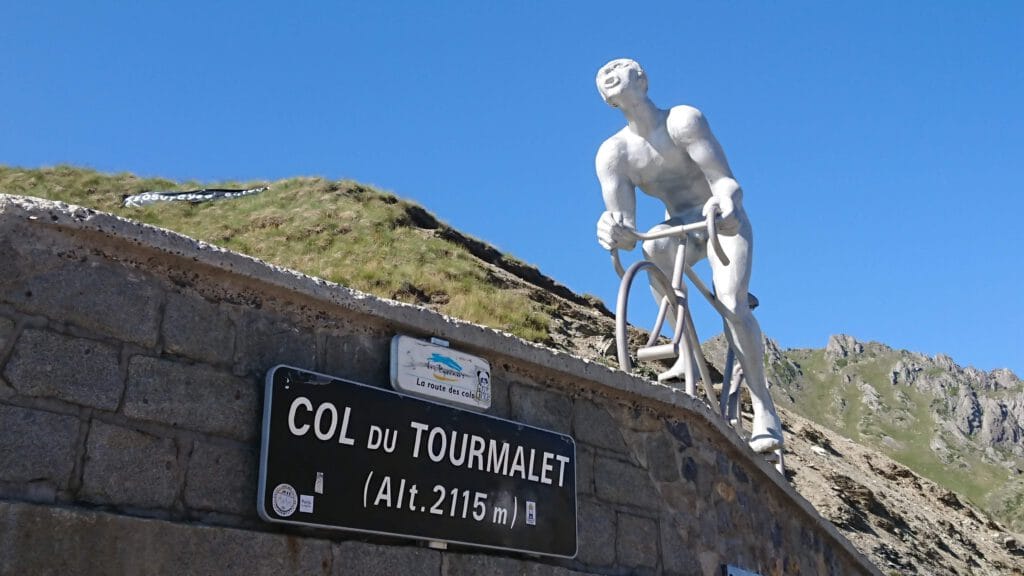
1. The legendary Col du Tourmalet
Let’s start with the one everyone expects — the queen of the Pyrenees. The mythical Col du Tourmalet (2,100 m) can be climbed from two sides, both irregular, tough, and absolutely magnificent.
From Luz-Saint-Sauveur, it’s an 18 km climb at 7.7% average. The first section to Barèges is a friendly warm-up, but after that the gradients bite — especially past the ski station at Tournaboup. Take a breather there if you can, because the final 8 km are merciless. The last kilometre? Switch off your thoughts, focus on the rhythm of your breath, and enjoy the triumph.
From Sainte-Marie-de-Campan, it’s 17 km at 7.5%. The first few kilometres lull you in — but don’t be fooled. Shade is scarce, and after La Mongie the mountain tests every pedal stroke. Yet there’s magic too — the sound of cowbells, the distant roar of the wind, the camaraderie of other cyclists.
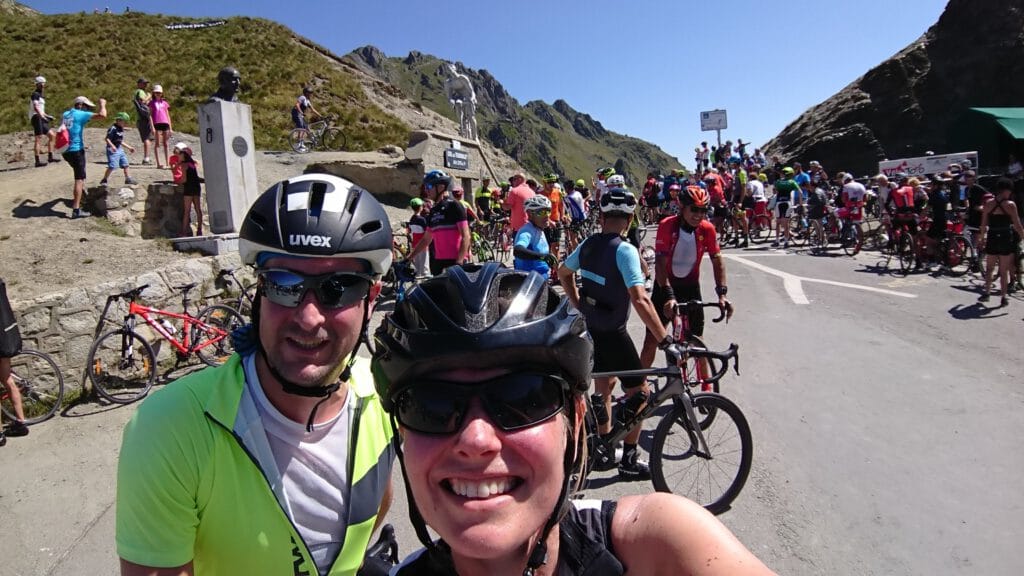
In summer, you’re never alone here — and that’s part of the Tourmalet’s magic. On the summit, emotions mix freely. Some laugh, some cry, some raise their arms to the sky. Sabine once spoke to a man who climbed the Tourmalet for a friend he’d lost — proof that this mountain holds meaning beyond numbers.
Scenic Itinerary Tip – Voie Laurent Fignon:
After Tournaboup, take the small turn onto this parallel road named after the legendary French cyclist. The tarmac is rougher, the views wilder, and the peace extraordinary. You’ll share the road with sheep and vultures instead of traffic — our little gift to you.
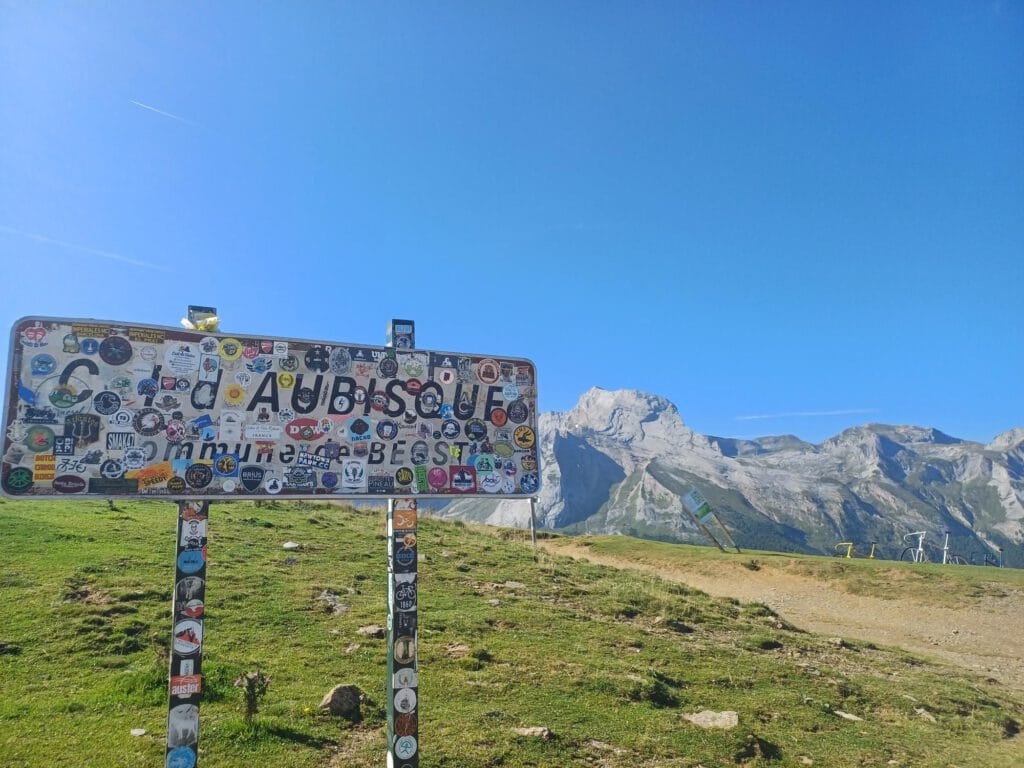
2. Col d’Aubisque from Laruns
Another timeless Tour de France icon. The Col d’Aubisque (16.8 km, 7.1%) begins in the charming village of Laruns, where a quick espresso or croissant on the square feels like the calm before the storm.
The early kilometres toward Eaux-Bonnes ease you in, but soon the road pitches up sharply, hitting 13–15%. It’s tough — but the higher you climb, the more spectacular the views.
At the summit, grazing sheep and horses often wander across the road, and three huge bicycles painted in Tour colours — yellow, green, and red polka dots — mark your victory.
The Aubisque holds a special place in our heart since it was the first big Pyrenees col we conquered. And perhaps it will be the same for many since it is a logical starting point. We still needed to learn to pace ourselves, leaving us out if breath many times. And we reached the top shrouded in mist, barely seeing a few metres ahead. That’s mountain cycling: unpredictable, raw, and real.
Scenic Itinerary Tip – Col du Soulor Extension:
Continue 10 km along the D918 ridge road to the Col du Soulor. Without mist it’s a breathtaking balcony route: descending first, then gently climbing again. Bring bike lights for the tunnels — and take time to stop. Few roads in the Pyrenees are this beautiful.
3. Gavarnie and the Secrets Beyond
This one’s a surprise entry — but a meaningful one. The 2026 Tour de France will finish in Gavarnie for the first time ever. We’ve cycled it for years, and it’s time to share why it deserves a spot in our Top 5. Want to know more unknown gems like this? Just get in touch.
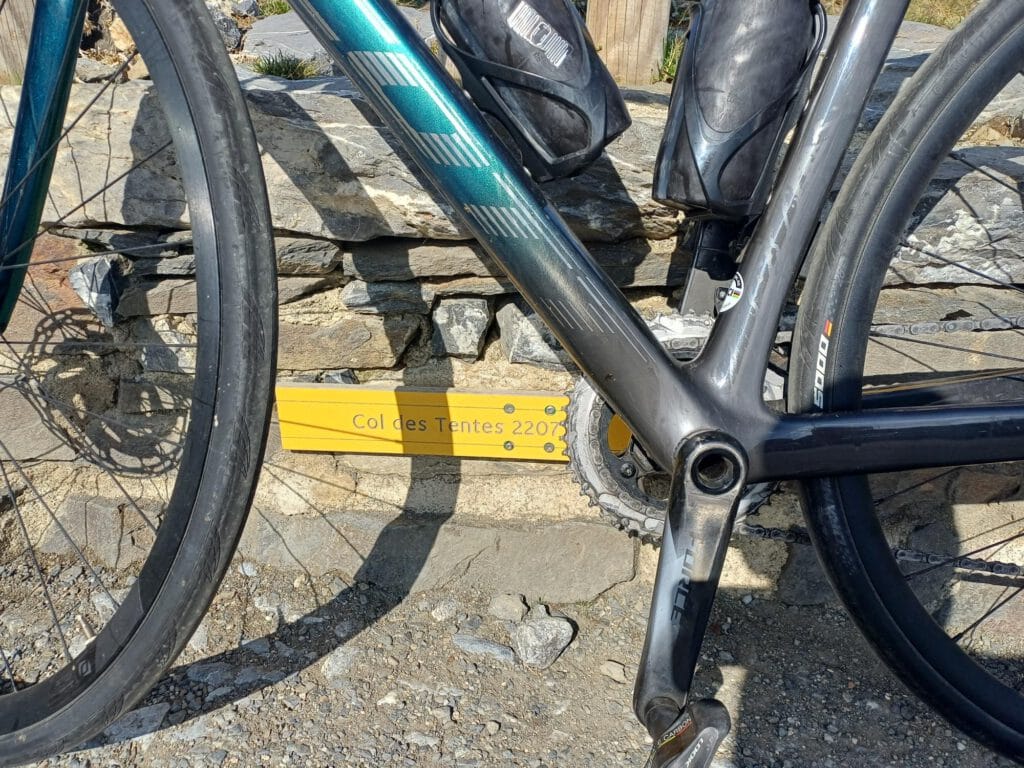
We rode it once on a summer day on a weather change from heat to rain — the perfect balance for climbing comfort. From Luz-Saint-Sauveur, the climb to Gavarnie forms the first part of the longer Col de Tentes (30 km, 5.1%).
The first 20 km wind gently along the Gave de Gavarnie river — steady, scenic, and deceptively easy. We stopped briefly in Gavarnie’s village centre, where we saw the Cirque de Gavarnie, already amazing even from a distance. It is one of the Pyrenees’ natural wonders.
After that, back on the bike, the climb sharpens. The final kilometres ramp up to 8–11%, hairpins revealing ever more dramatic views. Past the silent ski station at 1,865 m, we entered the wild heart of the Parc National des Pyrénées, home to vultures, marmots, and vast silence.
The road ended abruptly at 2,207 m on a windy parking plateau — an odd, unceremonious finish without the iconic sign you find on all the other cols. Yet the feeling of achievement was undeniable.
Gravel Itinerary Tip:
Instead of following the tarmac to the top, turn into Gavarnie’s centre and follow the gravel road towards the Cirque de Gavarnie. It’s gentle and scenic, perfect for a gravel bike. Bring hiking shoes to explore further — the waterfall view alone is worth the trip.
4. Col d’Aspin from Arreau
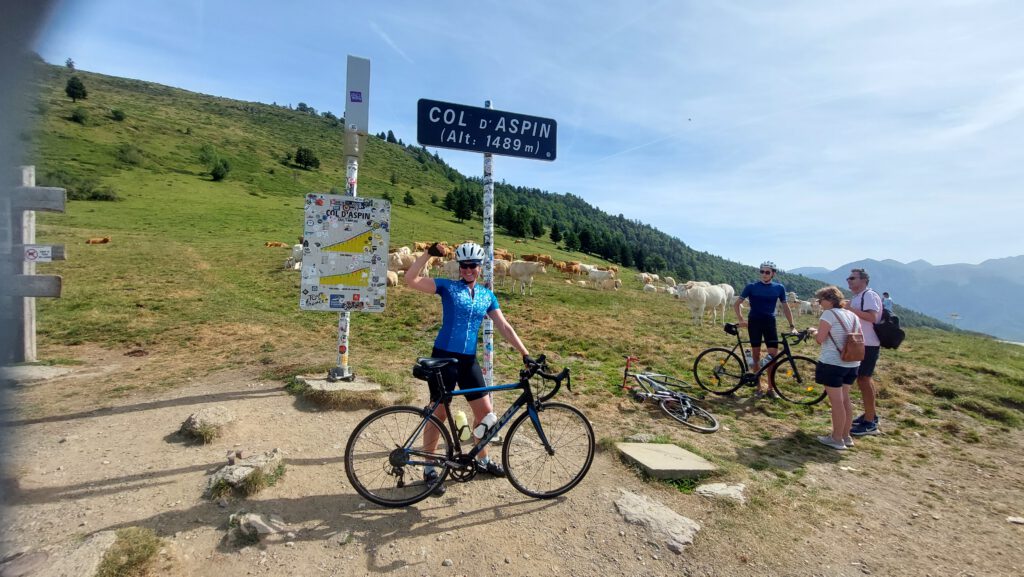
If you love Tour de France climbs, you can’t skip the Col d’Aspin. From Arreau, it’s 12.4 km at 6.5% average – a near-perfect climb for warming up. The first half is kind, the second half pure effort, with the last 5 km averaging 8%.
As you rise, amazing hairpin bends, the panorama opens – green valleys, distant peaks, the hum of cowbells in the air. Can you feel it?
Somehow we always end up here in August – peak season. That means more cyclists, motorbikes, and the buzz of shared energy. We always start early to avoid the heat. And that way we also avoid the big crowds.
At the summit, we always stop – not just for the sign photo, but for the moment. Cows wander lazily across the road, refusing to move “thou shall not pass“😄. We chat with other cyclists, exchange smiles, line up for the Strava-photo and the view reminds us why we ride. For us this is instant extra energy.
Campervan Tip:
We’ve spent many nights here in our camper, sharing stories with other travellers – hikers, campers, and cyclists alike. Every sunrise on the Aspin feels like a reward. If you travel with your own camper, we can design a route that includes this magic.
5. Hourquette d’Ancizan from Campan
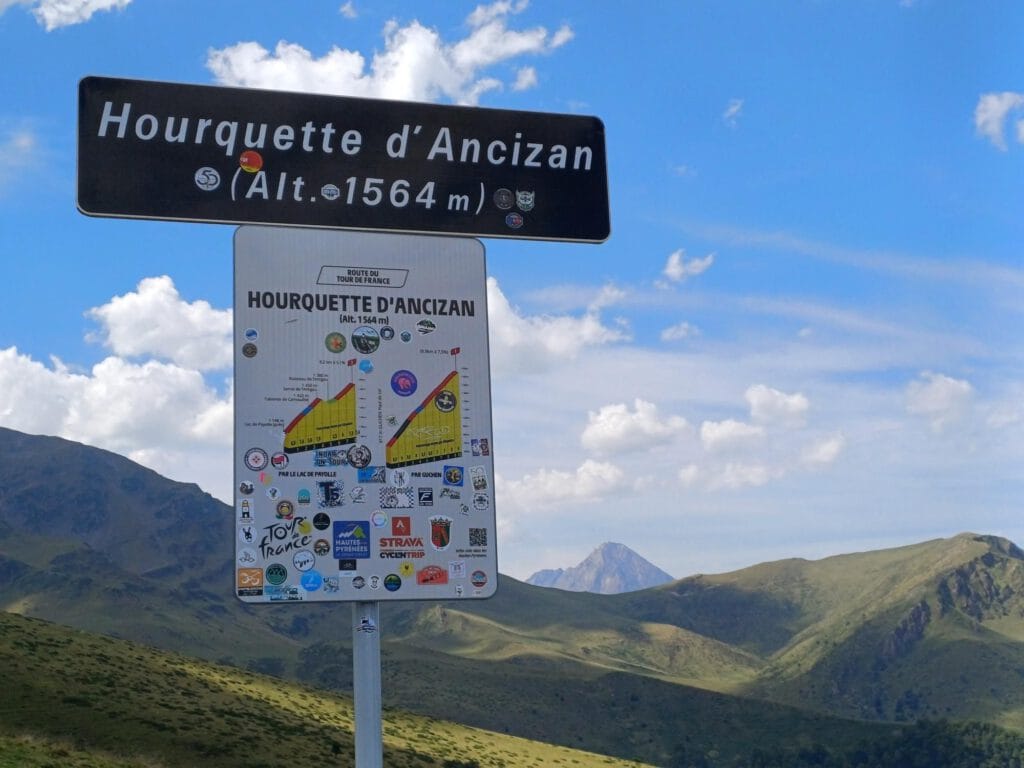
Less famous, but in our opinion one of the most beautiful passes in the Pyrenees. From Campan, the Hourquette d’Ancizan is 22 km long at 4.2%. But we usually start from Payolle, skipping the busier lower section. From there, it’s around 10 km of climbing with a short descent in the middle — not too steep, but deceptively challenging.
It’s a wonderfully scenic climb. The first part winds through forest beside a bubbling stream. Higher up, the views open wide and the meadows come alive with grazing cows, horses, and donkeys. From the top, you’ll enjoy a stunning view of the Pic du Midi.
Itinerary tip: Because the climb isn’t too hard, it combines perfectly with the Col d’Aspin for a beautiful loop ride.
Plan Your Own Pyrenees Cycling Adventure
Would you like to ride these legendary cols yourself? You can! At Pyrenees Cycling Guide, we share our experience and insider knowledge to help you plan your perfect cycling trip.
Whether you prefer a custom itinerary, self-guided e-guide, or our Gold Itinerary Support, we’ll help you design your dream week of Pyrenean cycling — tailored to your fitness, interests, and sense of adventure.
👉 Discover our services and start planning your Pyrenees cycling experience.